
Abstract
OBJECTIVE: Although acute severe asthma (ASA) affects 55% of asthma exacerbations, variations in physicians’ management of ASA have received less attention than practice trends for patients with stable asthma. Moreover, differences in care provided by specialists have not been addressed. This study aims to explore physicians’ knowledge, attitudes, and practice trends regarding pharmacological and ventilatory management of ASA, and to verify practice variations between pulmonologists and non-pulmonologists.
MATERIAL AND METHODS: In this cross-sectional survey, a non-probability convenience sample of physicians entitled to manage ASA was surveyed using Google Forms to collect data on identification of exacerbations, triage decisions, pharmacological and ventilatory management practices, and beliefs about prognosis. Subgroup responses (pulmonologists versus non-pulmonologists) were compared.
RESULTS: Ninety-three respondents were recruited mainly from the Middle East–North Africa region (59.1%), Europe (13.9%), and South/East Asia (12.9%). Sixty percent used predefined criteria to diagnose ASA, but these criteria were used less frequently for triage decisions. High-flow nasal cannula was readily available (93.5%), but “usually or mostly” used by only 29.03%. Pulmonologists demonstrated higher non-invasive ventilation (NIV) use “within and beyond” intensive care unit (P = 0.001), and more identified appropriate NIV settings (P = 0.048). 47% preferred individualizing the invasive mechanical ventilation (IMV) mode. Multiple organ failure, cardiac arrest, asthma severity, and comorbid pneumonia were most frequently rated as strongly correlated with mortality or endotracheal intubation. Respondents believed that ASA patients who receive IMV after a failed NIV trial have worse prognosis.
CONCLUSION: The use of pre-defined criteria for identifying ASA and triage decisions remains suboptimal. Several caveats related to optimal ventilatory settings exist, with significant differences between pulmonologists and non-pulmonologists.
Keywords: Acute asthma exacerbations, acute severe asthma, ventilatory management, non-invasive ventilation
Main Points
• Pre-defined criteria are used by 60% for acute severe asthma (ASA) diagnosis, and less for triage decisions.
• Physicians demonstrated reluctance to adopt the use of high-flow nasal cannula or non-invasive ventilation (NIV) for ASA despite widespread availability.
• Specialty-induced differences do exist regarding triage decisions, pharmacological, as well as ventilatory management practices.
• Caveats in knowledge of physiological rationale for NIV in asthma and best ventilatory settings were detected among ER/CCM physicians, whereas caveats in experience with sedation practices were detected among pulmonologists.
INTRODUCTION
Asthma is a chronic health condition that affects 300 million people worldwide and is estimated to cause approximately 1,000 deaths per day. It is estimated that asthma leads to a significant increase in disability-adjusted life years. Acute asthma exacerbations affect 25% of patients with asthma. In a single-center emergency department study involving 40 patients with acute asthma exacerbations, 55% had severe or life-threatening exacerbations. ASA represent 8% of intensive care units (ICU) admissions, and continue to burden different health systems, particularly emergency units and ICU, despite advances in pharmacological treatment of asthma, and development of evidence-based clinical practice guidelines to improve care of asthma.,
This alarming situation indicates a lack of consensus regarding the optimal approach to the management of acute asthma exacerbations. Despite that variations in clinical practice regarding diagnosis, prevention, education, long-term management and symptom control of asthma have been thoroughly studied globally,- less light has been shed on divergence of physicians’ approaches when encountering acute asthma exacerbations. Also, there’s limited data about the impact of the physician’s specialty and background training on management of stable asthma patients,, while such an impact on management of critical patients in asthma exacerbations are lacking.
Aim of the Study
Exploring the physicians’ self-reported knowledge, attitude and current clinical, pharmacological and ventilatory management practices for patients presenting with ASA. A subgroup analysis was conducted to explore potential practice variations between pulmonologists and non-pulmonologists [Emergency/Critical Care Medicine (ER/CCM) physicians].
MATERIAL AND METHODS
The survey was cross-sectional and was conducted from February 2024 to February 2025.
i. Target Respondents, Sampling Technique and Sample Size Calculation
Physicians involved in the care of adult asthmatic patients (general practitioners, family medicine doctors, internists, pulmonologists, and intensivists in different medical ICUs). The survey used a non-probability convenience sample, employing snowball sampling, and dissemination occurred through two distinct channels, which we now report separately.
• First, a directly invited component involved one investigator distributing the link to 110 pulmonologists across Egypt and individually contacting a further five physicians in other countries (United Kingdom, Saudi Arabia, Italy).
• Second, an open component involved further dissemination of the link through scientific societies and professional platforms in pulmonology and critical care medicine, and recipients were free to forward it through channels of their choosing.
ii. Questionnaire Development and Content Validation
• Item generation: A structured review of 45 publications (guideline documents, systematic reviews, randomised trials, observational studies, and editorials) addressing diagnosis, severity assessment, triage, pharmacological treatment, oxygen therapy, non-invasive and invasive ventilation, sedation and neuromuscular blockade, and outcomes of acute asthma exacerbations was conducted to identify areas of documented practice variation. Candidate items were drafted to map onto these areas and were grouped into seven domains.
• Anchoring of items to source documents: Each item was linked a priori to the guideline statement or primary source defining the reference standard against which responses were later classified as concordant or discordant, principally to the Global Initiative for Asthma (GINA) 2023/2024 strategy document for pharmacological management and severity assessment, and to the cited reviews and cohort studies for ventilatory and sedation practices.
• Expert review: The draft instrument was reviewed. Documents were reviewed by two authors, specialists in respiratory and critical care medicine (A.M.E. and R.S.C.), who assessed each item for relevance, clarity, and non-redundancy. Items were revised or removed by consensus.
• Final form: The final instrument comprised seven domains covering different aspects of management of acute asthma exacerbation and was administered via Google Forms (; for the full-text questionnaire, and (Supplementary () for a tabulated summary of the seven-domain questions).
iii. Sample Size Calculation:
For the descriptive study of a dichotomous outcome, the sample size was estimated to achieve pre-specified precision rather than pre-specified power. The anticipated proportion for the primary outcome was based on Assiri et al., in which 56% of physicians reported knowing the signs of an ASA attack; the complementary value of 0.44 was used to enter the reference table, as the variance term is symmetrical about 0.50. For a total confidence interval (CI) width of 0.20 (absolute precision ± 0.10) at a 95% confidence level, the required sample was 92 respondents.
Ethical Considerations
The study being academically endorsed by “The International Association of Noninvasive Mechanical Ventilation”, has been subjected to evaluation by the IANIV- Bioethics Committee for Clinical Research studies evaluation, Internal Code: EST: 87/24, and was granted approval (date: 14.05.2024). The online questionnaire includes a disclosure clarifying that the study does not collect personally identifiable or sensitive data from contributors or patients and only includes information and opinions about clinical practice related to asthma treatments. Data (e.g., age, affiliation, practice years) are collected only for analytic purposes and are treated as strictly confidential by the authors, who ensure that the data will not be shared or unlawfully used. A consent statement at the start of the questionnaire declares consent and confirms that the respondent is a medical doctor holding at least a graduate degree in medical science. Answering “yes” leads the respondent to the first domain, while answering “no” automatically leads the respondent to the end of the form to be submitted. The study was registered on ClinicalTrials.gov under NCT ID: NCT06652542.
Data Storage and Confidentiality
Contact information, i.e., the e-mail address, was optional. Other personal information, such as age, years of experience, and affiliation, was to be collected for descriptive purposes and to depict the general characteristics of the respondents providing information, but was not unlawfully shared or distributed. Access to such information was restricted to the authors of the questionnaire.
Management of Adverse Events
Given the commitment of the authors to respondents’ confidentiality, no adverse events were expected from this study.
Study Outcomes
The primary outcome intended for this study was the number of physicians who used predefined criteria for the diagnosis of ASA rather than clinical judgment. Secondary outcomes included variations in the provided pharmacological treatment and methods of nebulization therapy, the frequency of use of NIV, IMV and high-flow nasal cannula (HFNC) as for acute asthma exacerbations, awareness of the appropriate settings, as well as frequency of different complications during both NIV and IMV, barriers to use of either modality, and respondents’ beliefs about asthma prognosis.
Statistical Analysis
Statistical analysis was conducted using Statistical Package for the Social Sciences (SPSS) software, version 27 (IBM Corp., Armonk, New York, USA). The normality of the quantitative variables was assessed by visual inspection of histograms and by quantifying skewness and kurtosis. Later, to confirm the trend of the analysed variable, the Shapiro–Wilk test was used. Categorical variables were presented as numbers and percentages, while the continuous variables were presented as mean and standard deviation or median and interquartile range (IQR), as appropriate. Chi-square test or Fisher’s exact test was used for qualitative variables, and the Student’s t-test or the Mann-Whitney U test was used for quantitative variables. Response rates for individual survey questions were calculated based on the number of respondents to each question, excluding missing responses. A Subgroup analysis of interest was conducted by specialty, including only pulmonologists and ER/CCM physicians; the internal medicine/family medicine category was excluded due to limited numbers (total 5 respondents in this category).
Binary logistic regression was conducted using the backward likelihood-ratio method to explore potential predictors of certain practice trends (triage decisions, choice of NIV/IMV settings, and use of sedation and NMBs). Candidate predictors, including specialty, years of experience, academic degree, position, level of health care, and geographic region, were selected based on previous literature and clinical intuition. Predictors included in multivariate models were individualized for each outcome to avoid model overfitting and collinearity. The reported model was the final model after stepwise backward elimination; however, if this model demonstrated degraded overall accuracy, the pre-final significant model with the best overall accuracy was reported. The threshold for variable elimination was a probability of 0.10. For all statistical tests, the P value for a significant difference or effect was < 0.05.
RESULTS
The flow chart in summarizes the recruitment process and online dissemination of the survey form. Fifty-one of the 115 directly invited physicians (44.3%) submitted their responses, while open online dissemination generated 44 responses. Excluding two responses with missing data on the primary outcome, 93 of 95 responses were included in the analysis. summarizes respondents’ characteristics. 55 respondents (59.1%) were practicing physicians from the Middle East and North Africa (MENA) region, 13 (13.9%) from Europe, 12 (12.9%) from South/East Asia, 7 (7.5%) from Central/South America, and 6 (6.7%) from North America. The respondents had a median age of 37 years [(IQR: 30−44 ys.)] and were in practice for a median of 10 years (IQR: 5−15 ys.). The majority were practicing pulmonologists (66/93, 70.96%). In subgroup analysis, the two groups were comparable with regard to demographic characteristics, except for geographic distribution: most pulmonologists were from the MENA region, whereas most ER/CCM physicians were from MENA and South/East Asia (P = 0.035) ().
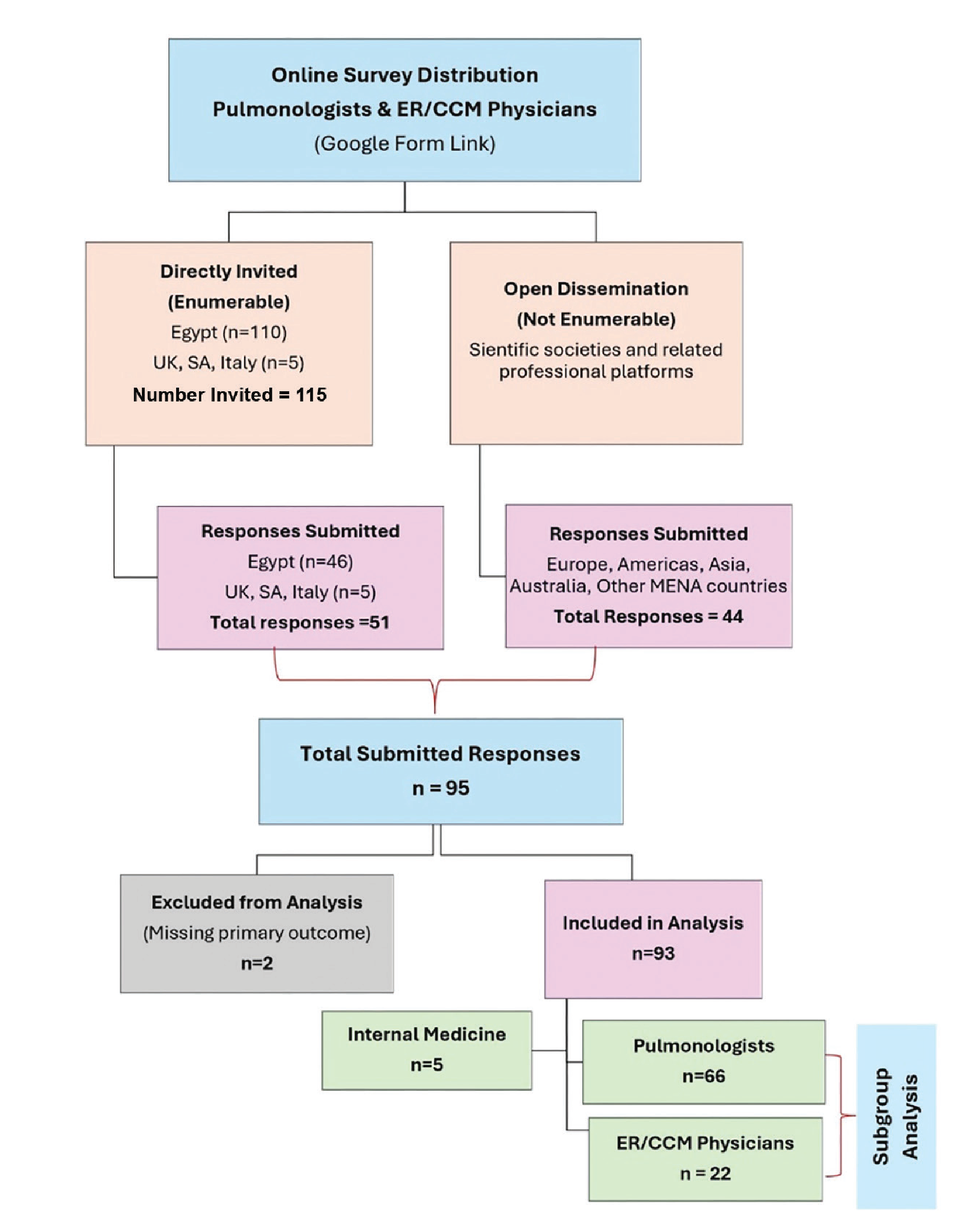
Flow chart demonstrating sampling and recruitment process
UK: United Kingdom, SA: Saudia Arabia, ER/CCM: Emergency/Critical Care Medicine
Table 1. Characteristics of the survey respondents
Total (93) | Pulmonologists (66) | ER/CCM Physician (22) | P value | |
|---|---|---|---|---|
Age (years) | 37 (30−44) | 38.2±10.5 | 39.9±10.3 | 0.527 |
Years of experience | 10 (5−15) | 10 (5−15) | 10 (5−17) | 0.728 |
Geographic region | ||||
MENA | 55 (59.14%) | 44 (66.7%) | 8 (36.4%) | 0.035* |
Europe | 13 (13.98%) | 8 (12.1%) | 4 (18.2%) | |
South and East Asia | 12 (12.9%) | 5 (7.6%) | 6 (27.3%) | |
Central and South America | 7 (7.53%) | 4 (6.1%) | 3 (13.6%) | |
North America | 6 (6.45%) | 5 (7.1%) | 1 (4.5%) | |
Specialty | ||||
Respiratory medicine/pulmonology | 66 (70.96%) | I/A | ||
Critical care/emergency medicine | 22 (23.66%) | |||
Internal/family medicine | 5 (5.38%) | |||
Highest academic degree(α) | ||||
MBBS or equivalent | 17 (18.68%) | 14 (21.5%) | 2 (9.5%) | >0.999 |
Master’s degree | 42 (46.15%) | 28 (43.1%) | 12 (57.1%) | |
MD/PhD degree | 32 (35.16%) | 23 (35.4%) | 7 (33.4%) | |
Position | ||||
General practitioner | 7 (7.53%) | 3 (4.5%) | 3 (13.6%) | 0.346 |
Resident | 13 (13.98%) | 10 (15.2%) | 2 (9.1%) | |
Specialist/registrar | 42 (45.16%) | 28 (42.4%) | 11 (50%) | |
Consultant | 31 (33.3%) | 25 (37.9%) | 6 (27.3%) | |
Health care level | ||||
Primary level | 6 (6.45%) | 5 (7.6%) | 0 | 0.642 |
Secondary level | 15 (16.13%) | 10 (15.2%) | 3 (13.6%) | |
Tertiary level | 72 (77.42%) | 51 (77.3%) | 19 (86.4%) | |
N.B.(α): 91 responders (65 pulmonologists, 21 ER/CCM physician) ER/CCM: Emergency/Critical Care Medicine, MENA: Middle East North Africa
Defining Asthma Exacerbations and Triage Decisions
As demonstrated in , % of the physicians used pre-specified criteria provided by GINA guidelines for diagnosing acute asthma exacerbations; however, fewer physicians used these criteria to decide on ER or ICU admission. The use of prespecified criteria for diagnosis of ASA and other triage decisions among pulmonologists was significantly higher than among ER/CCM physicians [P = 0.010, odds ratio (OR): 4.0, 95% CI: 1.5−11.1 for diagnosis, P = 0.030, OR: 3.2; 95% CI: 1.1−9.2 for ER admission decisions, and P = 0.007, OR: 4.8; 95% CI: 1.5−15.6 for ICU referral decisions] ().
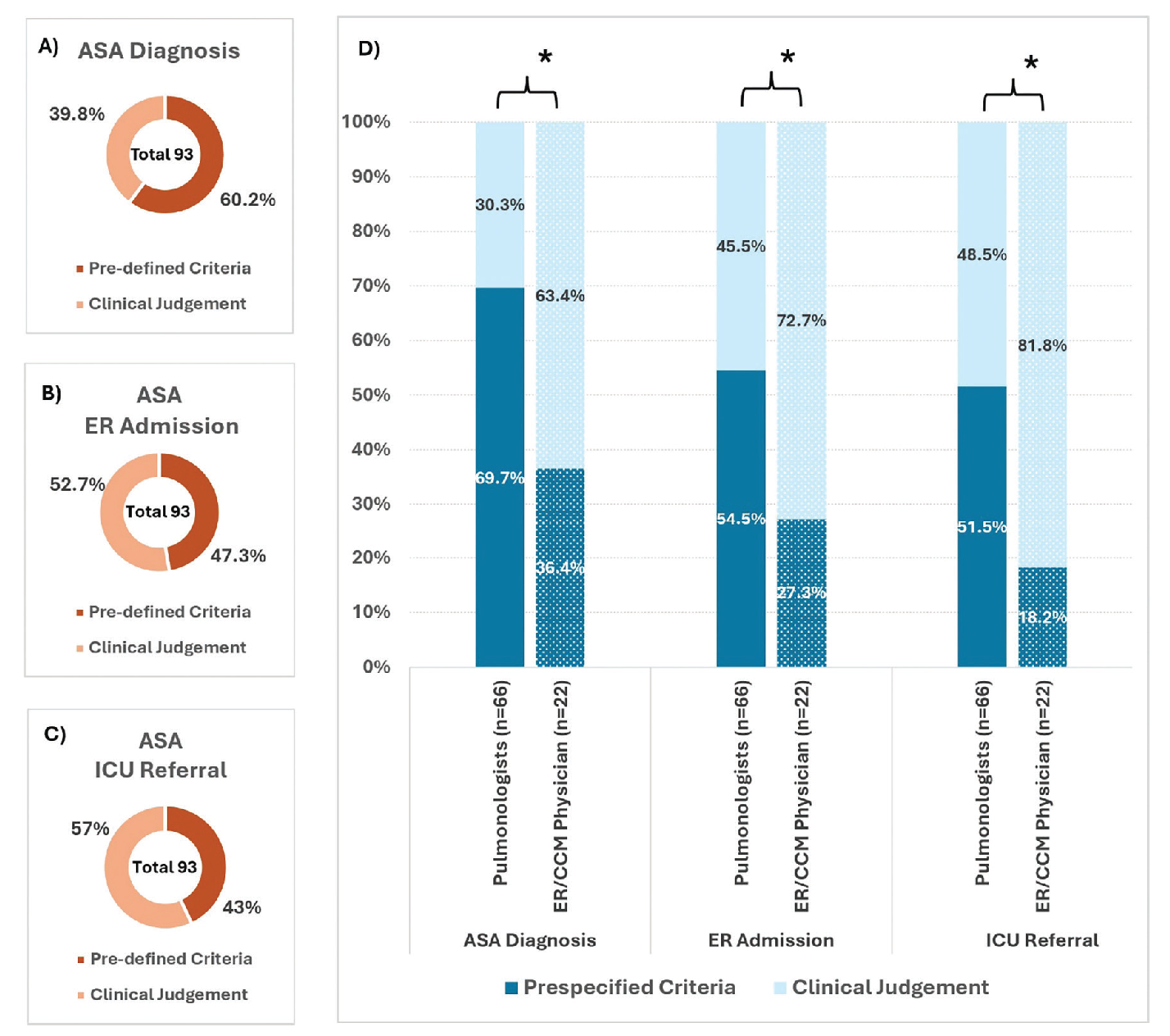
Respondents’ practices regarding criteria used for diagnosis of acute asthma exacerbations, ER admission and ICU referral. Data are displayed for the entire study cohort [Orange doughnut charts, and for subgroups (pulmonologists (solid blue) vs. ER/CCM physicians (dot-patterned blue))]. N.B. Horizontally oriented braces with asterisk denote statistically significant differences between pulmonologists vs. ER/CCM physicians
ASA: acute severe asthma, ICU: intensive care unit, ER/CCM: Emergency/Critical Care Medicine
Pharmacological Treatment
The overall use of short-acting β2 agonist (SABA) (96.7%) short-acting muscarinic antagonists (SAMA) (94.5%), inhaled corticosteroids (ICS) (98.8%), and systemic steroids (98.9%) were strikingly high, though differences in the frequency of use among respondents existed across these different medications (, upper left panel). The frequency of antibiotic use was variable. Jet nebulizers with face masks were used mostly by 30/91 (33%) of respondents, while frequencies were lower for other delivery methods (, left panel). demonstrates the frequency of use of different types of systemic steroids (lower left panel) and doses administered by physicians (lower right panels). The adjuvant medications most frequently used by the respondents included intravenous magnesium sulphate (90.3%) and aminophylline (58%) (). While 90.3% correctly recognized the guideline-approved indication for the use of magnesium sulphate, 58% incorrectly believed that such approval for the use of aminophylline exists ().
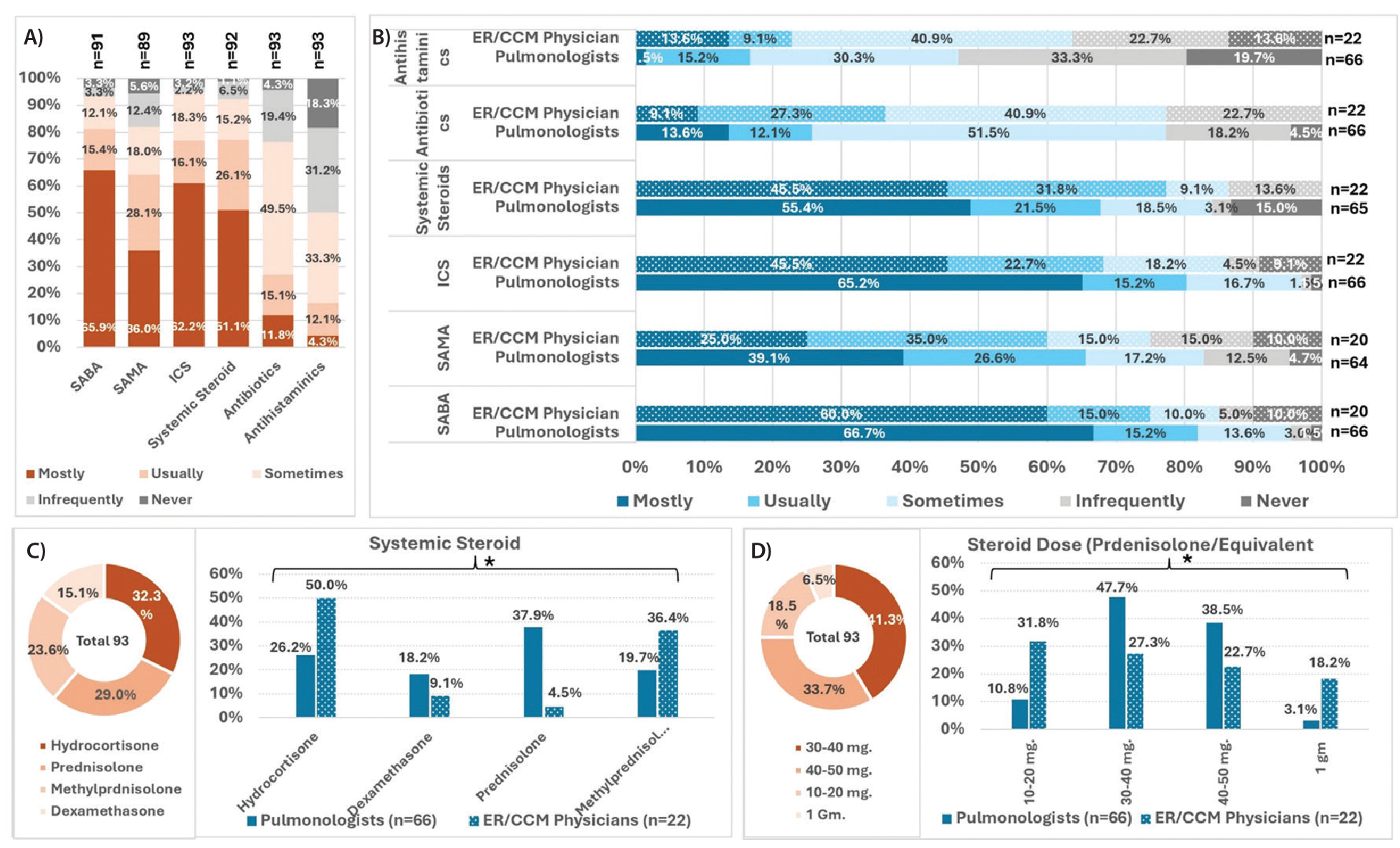
Pharmacological management of acute asthma exacerbations by respondents. Upper left panel represents data for all respondents, while upper right represents subgroup analysis (Pulmonologists vs. ER/CCM Physicians). Lower right and left panels display practices regarding systemic steroids. N.B. Braces with Asterisks indicate statistically significant differences
SABA: short-acting β2 agonist, SAMA: short-acting muscarinic antagonists, ICS: inhaled corticosteroids, ASA: acute severe asthma, ER/CCM: Emergency/Critical Care Medicine
The frequency of use of different medications was similar for both pulmonologists and ER/CCM physicians (, upper right panel). Notably, a greater proportion of ER/CCM physicians reported that they ‘never/infrequently’ use metered-dose inhalers (MDI) or dry powder inhalers (DPI), compared with fellow pulmonologists (OR: 4.6; 95% CI: 1.6−13.3, P = 0.004 for MDI, OR: 4.3; 95% CI: 1.4−13.5, P = 0.011 for DPI) (, right panel). Also, there were significant differences in types of systemic steroids used (P = 0.003) (, lower left panel), with pulmonologists less likely to use hydrocortisone or methylprednisolone than prednisolone (OR: 0.058; 95% CI: 0.0−0.4, P = 0.002 for hydrocortisone; OR: 0.1; 95% CI: 0.0−0.6 for methylprednisolone). There were also significant differences in the doses of systemic steroids (P = 0.006) (, lower right panel), with pulmonologists more likely to opt for a dose of 40−50 mg or 30−40 mg over a dose of 10−20 mg (OR: 5.0; 95% CI: 1.2−20.8, P = 0.032 for 40−50 mg prednisolone; OR: 5.1; 95% CI: 1.3−20.4, P = 0.027 for 30−40 mg prednisolone), but less likely to opt for methylprednisolone (OR: 0.1; 95% CI: 0.0−0.7, P = 0.024).
The use of magnesium sulphate and aminophylline was similar (P > 0.999 and P = 0.210, respectively). However, significantly fewer pulmonologists used epinephrine (OR: 0.2; 95% CI: 0.1−0.5, P = 0.002), IV ketamine (OR: 0.1; 95% CI: 0.03−0.4, P = 0.001), and inhaled anaesthetics (OR: 0.1; 95% CI: 0.02−0.6, P = 0.010) for such patients ().
Oxygen Therapy and Use of HFNC
Thirty-eight out of 93 physicians (59.4%) used oxygen therapy to treat respiratory failure, while 34.1% reported use of oxygen in absence of respiratory failure (). Although HFNC was available to most physicians (87/93, 93.5%), only 27 (29%) of them reported that they used it frequently or most of the time. The median oxygen flow used was 40 L/min (IQR: 30−50), while the median FiO2 delivered to the patients was 50% (IQR: 40−63). The most commonly reported factors hindering physicians’ uptake of HFNC delivery were unavailability (46%), unfamiliarity with the concept (17%), and limited experience (17%). Most physicians reported that the severity of ASA was the decisive factor in the choice between HFNC and NIV (81.4%), rather than the patients’ preference (34%). In subgroup analysis, there were no differences in the frequency of HFNC use, location of its use, the factors that hinder HFNC, or the factors that determine HFNC over NIV in either group ().
Ventilatory Management of Acute Asthma Exacerbations
• Non-invasive ventilation (NIV): explores the status of NIV as a ventilatory strategy for ASA. Although NIV was available to most physicians (98.9%), only 41.9% “usually or mostly” used it. Fifty-three percent report extended NIV use (inside and outside the ICU). In subgroup analysis, the extended use of NIV (inside and outside the ICU) was significantly higher among pulmonologists [41 (63.1%) vs. 5 (22.7%), P = 0.001, OR: 5.8; 95% CI: 1.9−17.9]. Appropriate responses to questions regarding the major concern that challenges physicians when using NIV for ASA, the optimal NIV settings, and the appropriate response to auto-positive end-expiratory pressure (PEEP) were reported by 46.7%, 43.9%, and 46.7% of respondents, respectively (). Notably, pulmonologists were better able to identify the optimal NIV settings (P = 0.046, OR: 3.2; 95% CI: 1.1−9.3) (). also displays the respondents’ perceptions of the common NIV complications. Respondents refrained from using NIV primarily due to unavailability (48.7%). A significantly higher number of ER/CCM physicians declined NIV use because of their belief in its ineffectiveness during ASA, compared to their counterparts (P < 0.001, OR: 0.03; 95% CI: 0.00−0.31).
Table 2. Respondents’ awareness of appropriate application & attitudes towards the use of NIV in ASA
Total | Pulmonologists (n = 66) | ER/CCM Physicians (n = 22) | P value | OR (95% CI) | |
|---|---|---|---|---|---|
Identifying the main concern with NIV in ASA | (n = 92) | (n = 65) | (n = 22) | ||
Appropriate response† | 43 (46.7%) | 30 (46.2%) | 10 (45.5%) | >0.999 | 1.0 (0.4−2.7) |
Less appropriate responses | 49 (53.3%) | 35 (53.8%) | 12 (54.5%) | ||
Identifying the best NIV settings in ASA | (n = 92) | (n = 64) | (n = 22) | ||
Appropriate response† | 41 (44.6%) | 35 (54.7%) | 6 (27.3%) | 0.046* | 3.2 (1.1−9.3) |
Less appropriate responses | 51 (55.4%) | 29 (45.3%) | 16 (72.7%) | ||
Address auto-PEEP during NIV appropriately | (n = 92) | (n = 65) | (n = 22) | ||
Appropriate response† | 43 (46.7%) | 32 (49.2%) | 8 (36.4%) | 0.322 | 1.7 (0.6−4.9) |
Less appropriate responses | 49 (53.3%) | 33 (50.8%) | 14 (63.6%) | ||
Causes hindering use of NIV(α) | (n = 82) | (n = 57) | (n = 21) | ||
Unavailability | 40 (48.78%) | 26 (45.6%) | 11 (52.4%) | 0.619 | 0.8 (0.3−2.1) |
Unfamiliarity | 11 (13.41%) | 8 (14%) | 1 (4.8%) | 0.431 | 3.3 (0.4−27.8) |
Limited experience | 20 (24.39%) | 14 (24.6%) | 4 (19%) | 0.766 | 1.4 (0.4−4.8) |
Ineffectiveness in ASA | 9 (10.98%) | 1 (1.8%) | 7 (33.3%) | <0.001** | 0.03 (0.0−0.3) |
Risk of delaying intubation | 16 (19.51%) | 13 (22.8%) | 3 (14.3%) | 0.536 | 1.8 (0.5−7.0) |
Risk of barotrauma | 23 (28.05%) | 17 (29.8%) | 5 (23.8%) | 0.778 | 1.4 (0.4−4.3) |
Lack of evidence | 3 (3.66%) | 2 (3.5%) | 1 (4.8%) | >0.999 | 0.7 (0.1−8.4) |
Not authorized | 2 (2.44%) | 2 (3.5%) | 0 (0%) | >0.999 | I/A |
Complications “usually/mostly” encountered(α) | (n = 90) | (n = 64) | (n = 22) | ||
Delayed endotracheal intubation | 19 (21.11%) | 15 (23.4%) | 4 (18.1%) | 0.769 | 1.4 (0.4−4.7) |
Haemodynamic instability | 10 (11.11%) | 8 (12.5%) | 2 (9%) | >0.999 | 1.4 (0.3−7.3) |
Barotrauma | 5 (5.62%)(β) | 4 (6.3%)(γ) | 1 (4.5%) | >0.999 | 1.4 (0.2−13.5) |
Claustrophobia | 29 (32.22%) | 24 (37.5%) | 3 (14.3%)(δ) | 0.060 | 3.6 (1.0−13.5) |
Abdominal distension | 29 (32.22%) | 22 (34.3%) | 4 (18.1%) | 0.187 | 2.4 (0.7−7.8) |
Retention of secretion | 33 (36.66%) | 24 (37.5%) | 7 (31.8%) | 0.798 | 1.3 (0.5−3.6) |
(α): multiple responses were permitted. P value and OR are for 2-by-2 comparisons [event frequency: not usually (never/infrequently/sometimes) vs. usually/mostly], (β): 89 responses, (γ): 63 responses, (δ): 21 responses. †: Limiting auto-PEEP as the main concern, RR 10/min-IPAP/PEEP 15/5 cmH2O-cycling at 50% of PEFR as the most appropriate NIV settings, and multiple parameter adjustment (trigger, cycling, PEEP settings) to address auto-PEEP appropriately are set as the appropriate and correct responses by the investigators, (*): indicates a significant P value <0.05, (**): indicates a highly significant P value < 0.001. ASA: acute severe asthma, ER/CCM: Emergency Medicine/Critical Care Medicine, NIV: non-invasive ventilation, RR: respiratory rate, PEEP: positive end-expiratory pressure, PEFR: peak expiratory flow rate
Beliefs regarding the physiological role of NIV in acute asthma exacerbations and the level of evidence supporting the therapeutic benefits are summarized in . There was agreement on the ability of NIV to improve gas exchange (90%), recruit the lungs (87.9%), and unload respiratory muscles (82%) (, upper left panel). On the other hand, the physicians were divided regarding the level of the supporting evidence (, lower left panel). Responses of physicians in the two groups were comparable in those respects (, right upper and lower panels).
• Invasive mechanical ventilation (IMV): IMV was available to 88.1% of the respondents; there was no difference between the two groups (89.4% vs. 90.9%, P > 0.999, OR: 1.0;95% CI: 0.2−5.2). Most respondents believed that the most physiological and successful mode of delivering IMV for ASA would differ from patient to patient (). A combination of respiratory rate (RR) 12/min., Target Tve 5−7 mL/kg/IBW, PEEP 5 cmH2O, Ti 1 sec. was recognized as the best IMV settings for acute asthma exacerbations by 44/92 physicians (47.4%), while the rest chose settings that included higher tidal volumes, PEEP or Inspiratory time (). Similar proportions of participants recognized the optimal IMV settings (P > 0.999, OR: 1.0; 95% CI: 0.4−2.7). Haemodynamic instability and ventilator-associated pneumonia were most frequently rated as “usually/mostly” encountered with IMV in acute asthma exacerbations (30.6% and 29.9%, respectively) ().
Table 3. Respondents’ awareness of appropriate application and attitudes towards IMV in ASA
Total (n = 93) | Pulmonologists (n = 66) | ER/CCM physicians (n = 22) | P value | OR (95% CI) | |
|---|---|---|---|---|---|
The most physiological mode | (n = 92) | (n = 65) | (n = 22) | ||
Pressure-controlled modes | 25 (27.17%) | 19 (29.2%) | 5 (22.7%) | 0.363(Ω) | OR1=1.4 (0.5−4.5), P = 0.594 |
Volume- controlled modes | 13 (14.13%) | 7 (10.7%) | 5 (22.7%) | OR2=0.4 (0.1−1.5), P = 0.170 | |
Dual modes | 11 (11.96%) | 6 (9.2%) | 4 (18.2%) | OR3=0.5 (0.1−1.9), P = 0.442 | |
Case-by-case | 43 (46.74%) | 33 (50.7%) | 8 (36.4%) | OR4=2.0 (0.7−5.6), P = 0.207 | |
The most successful mode | (n = 92) | (n = 65) | (n = 22) | ||
Pressure-controlled modes | 28 (30.43%) | 22 (33.8%) | 5 (22.7%) | 0.844(Ω) | OR1=1.8 (0.6−5.5), P = 0.426 |
Volume- controlled modes | 16 (17.39%) | 11 (16.9%) | 4 (18.2%) | OR2=0.9 (0.3−3.2), P > 0.999 | |
Dual modes | 12 (13.04%) | 8 (12.3%) | 3 (13.6%) | OR3=0.9 (0.2−3.7), P > 0.999 | |
Differs from patient to patient | 36 (39.13%) | 24 (36.9%) | 10 (45.5%) | OR4=0.6 (0.2−1.7), P = 0.438 | |
Appropriate IMV settings | (n = 92) | (n = 65) | (n = 22) | ||
Appropriate response† | 44 (47.8%) | 33 (50.8%) | 11 (50%) | >0.999 | 1.0 (0.4−2.7) |
Less appropriate responses | 48 (52.2%) | 32 (49.2%) | 11 (50%) | ||
Complications “usually/mostly” encountered(α) | (n = 87) | (n = 62) | (n = 21) | ||
Haemodynamic instability | 27 (30.68%)(β) | 19 (30.1%)(γ) | 8 (38.1%) | 0.592 | 0.7 (0.3−2.0) |
Barotrauma | 17 (19.54%) | 13 (20.9%) | 4 (19%) | >0.999 | 1.1 (0.3−3.9) |
VAP | 26 (29.89%) | 19 (30.1%)(γ) | 7 (35%)(δ) | 0.783 | 0.8 (0.3−2.3) |
Airway injury | 19 (21.84%) | 15 (24.1%) | 4 (19%) | 0.769 | 1.4 (0.4−4.7) |
MOF | 11 (11.64%) | 8 (12.9%) | 3 (14.2%) | >0.999 | 0.9 (0.2−3.7) |
(α): multiple responses were permitted. P value and OR are for 2*2 comparisons (event frequency: not usually (never/infrequently/sometimes) vs. usually/mostly). (β): 88 responses. (γ): 63 responses. (δ): 20 responses. (Ω): P value for 2-by-4 table (two groups across the four MV mode categories). †: RR 12/min., Target Tve 5−7 mL/kg/IBW, PEEP 5 cmH2O, Ti 1 sec. was set as the most appropriate answer by the investigators. 1: odds for pulmonologist to choose PC over not declining PC (compared to ER/CCM physicians), 2,3,4: odds for pulmonologists choosing VC, dual mode, individualized option−respectively−over not declining them (compared to ER/CCM physicians). ASA: acute severe asthma, IMV: invasive mechanical ventilation, VAP: ventilator-associated pneumonia, MOF: multi-organ failure
• Assisted ventilation through sedation and neuromuscular blockade: Sedatives were used by 50% of physicians during NIV, and 85.1% used sedation “frequently” during IMV. While 40.9% opted for dexmedetomidine during NIV, 62.6% and 50.5% of respondents opted for benzodiazepines and opioids/propofol, respectively, during IMV ( and ). Physicians preferred to use their clinical judgement to titrate sedation therapy. Yet structured evaluation using Richmond’s Agitation-Sedation Scale was more frequent during IMV. Limited experience remained the main factor hindering the physicians from administering sedatives for ASA during both NIV and IMV ( and ).
Table 4. Respondents’ attitudes towards the use of sedation during NIV for ASA
Total (93) | Pulmonologists (66) | ER/CCM physicians (22) | P value | OR (95% CI) | |
|---|---|---|---|---|---|
Use of Sedation during NIV for ASA† | 46 (50%) | 32 (48.5%) | 10 (45.5%) | 0.625 | 1.3 (0.5−3.5) |
Sedatives frequently used(α) | (n = 88) | (n = 61) | (n = 22) | ||
Benzodiazepines | 38 (48.18%) | 29 (47.5%) | 5 (22.7%) | 0.048* | 3.1 (1.01−9.4) |
Opioids/propofol | 28 (31.82%) | 18 (29.5%) | 8 (36.4%) | 0.597 | 0.7 (0.3−2.0) |
Dexmedetomidine | 36 (40.91%) | 21 (34.4%) | 14 (63.6%) | 0.024* | 0.3 (0.1−0.8) |
Causes hindering use of sedation(α) | (n = 85) | (n = 60) | (n = 21) | ||
Unfamiliarity/limited experience | 24 (28.24%) | 22 (36.7%) | 1 (4.8%) | 0.005* | 11.6 (1.5−92.3) |
Ineffectiveness | 5 (5.88%) | 4 (6.7%) | 1 (4.8%) | >0.999 | 1.4 (0.2−13.5) |
Sedation is contraindicated | 20 (23.53%) | 13 (21.7%) | 5 (23.8%) | >0.999 | 0.9 (0.3−2.8) |
Sedation is risky | 45 (52.94%) | 29 (48.3%) | 13 (61.9%) | 0.320 | 0.6 (0.2−1.6) |
Lack of supporting evidence | 2 (2.35%) | 2 (3.3%) | 0 | >0.999 | I/A |
Not authorized | 4 (4.71%) | 2 (3.3%) | 2 (9.5%) | 0.275 | 0.3 (0.0−2.5) |
Tools used to titrate sedation | (n = 89) | (n = 62) | (n = 22) | ||
Clinical judgement | 26 (29.21%) | 22 (35.5%) | 3 (13.6%) | 0.044*(Ω) | OR1 3.5 (0.9−13.1), P = 0.062 |
RASS | 17 (19.10%) | 12 (19.4%) | 3 (13.6%) | OR2 1.5 (0.4−6.0), P = 0.749 | |
CAM-ICU score | 11 (12.36%) | 7 (11.3%) | 4 (18.4%) | OR3 0.6 (0.2−2.3), P = 0.467 | |
GCS | 16 (17.98%) | 12 (19.4%) | 4 (18.4%) | OR4 1.1 (0.3−3.9), P > 0.999 | |
Clinical judgement with another tool | 19 (21.35%) | 9 (14.5%) | 8 (36.4%) | OR5 0.3 (0.1−0.9), P = 0.036* |
†: 92 responses. (α): multiple responses were permitted. 1: Odds for pulmonologists to opting for clinical judgement alone over declining clinical judgement alone compared to ER/CCM physicians, 2,3,4,5: odds for pulmonologists choosing RASS, CAM-ICU, GCS, or clinical tool plus another tool respectively, over declining them (compared to ER/CCM physicians).(Ω): P value for 2-by-5 table (two groups across the five titration tools). (*): indicates a significant P value <0.05. ASA: acute severe asthma, ER/CCM: Emergency Medicine/Critical Care Medicine, NIV: non-invasive ventilation, RASS: Richmond’s agitation-sedation scale, ICU: intensive care unit, CAM-ICU: confusion assessment method in ICU, GCS: Glasgow coma scale
Table 5. Respondents’ attitudes towards the use of sedation & NMBs during IMV for ASA
Total (93) | Pulmonologists (66) | ER/CCM (22) | P value | OR (95% CI) | |
|---|---|---|---|---|---|
Use of sedation during IMV for ASA | (n = 89) | (n = 63) | (n = 21) | ||
Never/infrequently | 11 (11.82%) | 8 (12.6%) | 2 (9.5%) | >0.999 | 0.4 (0.1−1.2)† |
Sometimes | 24 (25.08%) | 16 (25.4%) | 6 (28.6%) | ||
Usually/mostly | 54 (85.06%) | 39 (61.9%) | 13 (61.9%) | ||
Sedatives frequently used(α) | (n = 91) | (n = 64) | (n = 22) | ||
Benzodiazepines | 57 (62.64%) | 39 (60.9%) | 13 (59.1%) | >0.999 | 1.1 (0.4−2.9) |
Opioids/propofol | 46 (50.55%) | 29 (45.3%) | 13 (59.1%) | 0.326 | 0.6 (0.2−1.5) |
Dexmedetomidine | 28 (33.77%) | 19 (29.7%) | 9 (40.9%) | 0.430 | 0.6 (0.2−1.7) |
Inhaled anaesthetics/barbiturates | 8 (%) | 5 (7.8%) | 2 (9.1%) | >0.999 | 0.8 (0.2−4.7) |
Causes hindering use of sedation(α) | (n = 77) | (n = 52) | (n = 20) | ||
Unfamiliarity/ limited experience | 30 (39.47%) | 23 (44.2%) | 5 (25%) | 0.180 | 2.4 (0.8−7.5) |
Ineffectiveness | 11 (14.47%) | 6 (11.5%) | 5 (25%) | 0.166 | 0.4 (0.1−1.5) |
Sedation is risky | 26 (33.77%) | 17 (32.1%)(β) | 7 (35%) | >0.999 | 0.9 (0.3−2.4) |
Not authorized | 10 (13.16%) | 7 (13.5%) | 3 (15%) | >0.999 | 0.9 (0.2−3.8) |
Tools used to titrate sedation | (n = 92) | (n = 65) | (n = 22) | ||
Clinical judgement | 21 (22.83%) | 15 (23.1%) | 3 (13.6%) | 0.658(Ω) | OR1 1.9 (0.5−7.3), P = 0.543 |
RASS | 24 (26.09%) | 15 (23.1%) | 8 (36.4%) | OR2 0.5 (0.2−1.5), P = 0.267 | |
CAM-ICU score | 9 (9.78%) | 6 (9.2%) | 3 (13.6%) | OR3 0.6 (0.1−2.8), P = 0.686 | |
GCS | 17 (18.84%) | 13 (20%) | 3 (13.6%) | OR4 1.6 (0.4−6.2), P = 0.751 | |
Clinical judgement with another tool | 21 (22.83%) | 16 (24.6%) | 5 (22.7%) | OR5 1.1 (0.4−3.5), P > 0.999 | |
Use of NMBs during IMV for ASA | (n = 90) | (n = 64) | (n = 21) | ||
Never/infrequently | 40 (44.44%) | 31 (48.4%) | 6 (28.6%) | 0.098 | 0.4 (0.1−1.2)†† |
Sometimes | 37 (41.11%) | 22 (34.45) | 13 (61.9%) | ||
Usually/mostly | 13 (13.97%) | 11 (17.2%) | 2 (9.5%) | ||
NMBs considered safe during IMV for ASA | (n = 91) | (n = 65) | (n = 21) | ||
Cisatracium | 26 (28.57%) | 13 (20%) | 11 (52.4%) | 0.010* | 0.2 (0.1−0.7) |
Atracurium | 31 (34.07%) | 29 (44.6%) | 1 (4.8%) | <0.001** | 16.1 (2.0−127.0) |
Vecuronium | 18 (19.78%) | 13 (20%) | 5 (23.8%) | 0.761 | 0.8 (0.2−2.6) |
Succinyl choline | 16 (17.58%) | 10 (15.4%) | 4 (19%) | 0.738 | 0.8 (0.2−2.8) |
Duration of NMBs use | (n = 91) | (n = 65) | (n = 21) | ||
Only during intubation procedure | 28 (30.77%) | 15 (23.1%) | 10 (47.6%) | 0.077(Ω) | OR 2.6 (0.9−7.5), P = 0.098 |
Only for the first 24 hours | 50 (54.59%) | 39 (60%) | 10 (47.6%) | OR 0.1 (0.0−1.2), P = 0.064 | |
Until weaning is attempted | 13 (14.29%) | 11 (16.9%) | 1 (4.8%) | OR 0.4 (0.0−3.1), P = 0.438 | |
The greatest concern during NMBs | (n = 91) | (n = 65) | (n = 21) | ||
Haemodynamic compromise | 23 (25.27%) | 16 (24.6%) | 5 (23.8%) | >0.999 | 1.0 (0.3−3.3) |
Hepatotoxicity | 3 (3.30%) | 2 (3.1%) | 0 | >0.999 | I/A |
Myopathy | 54 (59.34%) | 38 (38.5%) | 14 (66.7%) | 0.611 | 0.7 (0.3−2.0) |
VAP | 11 (12.09%) | 9 (13.8%) | 2 (9.5%) | >0.999 | 1.5 (0.3−7.7) |
(α): multiple responses were permitted, (β): 53 responses, (Ω): P value for 2-by-5 table (two groups across the five titration tools)/2-by-3 table (two groups across the three NMBs duration categories), †: odds for pulmonologists using sedation “usually/mostly” over “never/infrequently/sometimes” (compared to odds for ER/CCM physicians), ††: odds for pulmonologists using NMBs “sometimes/usually/mostly” over “never/infrequently” (compared to odds for ER/CCM physicians) 1: odds for pulmonologists using clinical judgement alone over other options (compared to odd for ER/CCM physicians), 2,3,4,5: odds for pulmonologists choosing RASS, CAM-ICU, GCS, or clinical tool plus another tool respectively, over other option (compared to ER/CCM physicians). 6: odds for pulmonologists using NMBs “for 24 hrs.” over “only at intubation” (compared to odds for ER/CCM physicians), 7: for extending NMBs “until weaning” over “only at intubation”, 8: for using NMBs “for 24” hours over “until weaning” (*): indicates a significant P value <0.05. (**): indicates a highly significant P value <0.001. ASA: acute severe asthma, NMBs: neuromuscular blockers, ER/CCM: Emergency/Critical Care Medicine, RASS: Richmond’s agitation-sedation scale, GCS: Glasgow coma scale, ICU: intensive care unit, CAM-ICU: confusion assessment method in ICU, VAP: ventilator-associated pneumonia
Despite a comparable frequency of sedation during NIV, the two groups demonstrated different in their preferences, with dexmedetomidine use higher among ER/CCM physicians (P = 0.024), whereas benzodiazepine use was higher among pulmonologists (P = 0.048). The two groups differed in their titration approaches (P = 0.044). Notably, more pulmonologists admitted perceived limitations in experience that hindered them from using sedation during NIV (P = 0.005) (). Sedation practices during IMV were largely comparable ().
Most pulmonologists fully agreed that sedation helps promote comfort during IMV, a view shared by fewer ER/CCM physicians (P = 0.030) (, upper right panel). Fifty respondents (54.5%) extend the use of NMBs to the first 24 hours but not beyond. The greatest concerns whilst administering NMBs were thought to be myopathy (59.3%) and haemodynamic compromise (25.2%) (). Practice patterns regarding NMBs in ASA were comparable between the two groups, except views on the safest drug (P = 0.001) (). Agreement with the therapeutic benefits of NMBs is displayed in , (lower-left panel). Notably, more ER/CCM expressed high levels of agreement with NMBs’ ability to promote synchrony during IMV in ASA (P = 0.049) (, lower right panel).
Outcomes of Acute Asthma Exacerbations
demonstrates the respondents’ beliefs about factors associated with adverse outcomes, such as mortality and endotracheal intubation. Most respondents reported strong correlations between multi-organ failure (MOF) (81.1%), asthma severity (80.0%), cardiac arrest (79.1%), presence of pneumonia (76.6%), and presence of comorbidities (76.6%). Fifty-six of 83 respondents (67.5%) perceived NIV failure followed by IMV to be associated with worse prognosis, while 27/83 (32.5%) perceived primary IMV as a ventilatory strategy to be associated with worse prognosis. A statistically significant difference was observed between the two groups in the frequency of ‘strong/perfect’ correlation versus “weak correlation” for the association between previous hospitalization and mortality/endotracheal intubation (RR: 1.4; 95% CI: 0.9−2.0, P = 0.008 for pulmonologists rating a strong/perfect correlation). The same pattern was noted for beliefs regarding the impact of previous intubation (RR: 1.3; 95% CI: 1.0−1.8, P = 0.009 for pulmonologists rating a strong/perfect correlation). Although a greater proportion of pulmonologists believed that the worst prognosis for patients with acute asthma exacerbations would be for patients receiving IMV after NIV failure (43/60, 71.7%), ER/CCM physicians believed that the prognosis would follow primary IMV (9/19, 24.1%). However, the difference was not statistically significant (OR: 2.3; 95% CI: 0.8−6.6, P = 0.163).
Predictors of Practice Patterns
Practicing pulmonology was an independent significant predictor of using pre-defined criteria for diagnosing ASA, adjusted to geographic region, [adjusted OR (aOR) 5.6; 95% CI: 1.8−17.5, overall model fit: χ2= 10.7, P = 0.013, R2= 0.156, overall accuracy 68.2%]. Also, practicing pulmonology was an independent predictor for using such criteria for deciding upon ER admission (aOR 3.9; 95% CI: 1.1−10.2), when adjusted for the clinical position of respondents, which was also a significant predictor of this outcome (overall model fit: χ2= 14.3, P = 0.002, R2= 0.204, overall accuracy 67%). Similarly, both practicing pulmonology and position could independently predict use of pre-defined criteria for ICU referral (aOR for specialty 5.3; 95% CI: 1.5–18, aOR for consultant position 4.6; 95% CI: 1.1−19.9, aOR for specialist position 6.1; 95% CI: 1.4–25.7, overall model fit: χ2= 15.5, P = 0.001, R2= 0.217, overall accuracy 67%). Neither years of experience, nor academic degree, nor level of health care could reliably explain additional variance in triage decisions ().
While practicing pulmonology was the only independent predictor of choosing appropriate NIV settings, when adjusted to the highest academic degree (aOR 2.9; 95% CI: 1.0–8.5, overall model fit: χ2= 8.2, P = 0.041, R2= 0.125, overall accuracy 67%), years of experience was the only independent predictor of choosing appropriate IMV settings (aOR 1.1; 95% CI: 1.0−1.1, overall model fit: χ2= 9, P = 0.011, R2= 0.132, overall accuracy 59.8%). Both years of experience and Masters’ degree were independent predictors of a respondent’s inclination to use sedation during NIV, when adjusted to the specialty (overall model fit: χ2= 13.7, P = 0.008, R2= 0.209, overall accuracy 66.7%). No factors could reliably predict the respondents’ use of NMBs during IMV for ASA patients ().
DISCUSSION
This survey attempted to explore variations in the management of ASA across different geographic regions and health care levels and to identify specialty-related practice differences. A majority of respondents use predefined objective criteria to triage patients presenting with ASA; however, reliance on clinical judgment remains considerable, particularly among pulmonologists. There is consensus regarding the use of inhaled medications, although the use of some adjuvant medications differed between the two groups. The use of HFNC remains limited despite its availability. There were significant differences between pulmonologists and ER/CCM physicians in knowledge, attitudes, and practices related to ventilatory support and the use of sedation and neuromuscular blockers. Exploring respondents’ insights into the prognosis of ASA patients revealed that multiple organ failure, cardiac arrest, asthma severity, and comorbid pneumonia were the highest-ranked associated risk factors for mortality/endotracheal intubation. Most believed that a failed NIV trial prior to endotracheal intubation was associated with worse outcomes to a greater extent than primary endotracheal intubation.
Diagnosis of ASA, Triage Decisions & Pharmacological Management
Though the use of pre-specified criteria for diagnosing ASA and for triage decisions was the prevailing practice among respondents in this study, reliance on clinical judgement remained as high as 40−48%. These results are consistent with reports by Kumar et al., where only a minority of patients received objective assessment using peak expiratory flow rate, spirometry, or asthma control test. This can be explained by lack of consensus on defining the severity of asthma exacerbations, and wide variability across the available literature,or the unavailability of spirometry as in Middle Esat and North Africa regions. GINA 2025 underscores employing forced expiratory volume at 1 second (FEV1) decline in detecting asthma exacerbations, yet it acknowledges that symptoms may be more sensitive at the onset of the exacerbation. However, the challenge of poor symptom perception by some patients despite concurrent decline in FEV1 highlights the importance of use of objective assessment.
SABA, SAMA, ICS, and systemic corticosteroids demonstrated the highest overall use in this study, which is similar to Jayadeva and Panchaksharimath However, this greatly surpasses frequency of use reported by Chan et al. This suggests regional differences in prescription patterns, as noted between UK and USA during the 30-days following asthma exacerbations. Similar disparities were detected in the frequency of use of methylxanthines, which was limited to 4.5% in UK and 0.6% in USA, but increases -against the current recommendations- to 34−53 in India. In this study, a possible explanation is misconceptions about guideline recommendations, since the same proportion believed it was recommended for use. But also, the low cost of the drug and limited accessibility/affordability of other medications might have impacted practice trends in such regions., Subgroup analysis revealed some differences in practice trends, including delivery methods, steroid types, and prescribed doses. Probably, higher familiarity and competence of pulmonologists regarding the use of MDI/DPI explain this difference., Despite comparable knowledge of the current recommendations regarding adjuvants, significantly more ER/CCM physicians still prescribe epinephrine, ketamine, and inhaled anaesthetics for acute asthma exacerbations. Similarly, Homer-Bouthiette et al. detected a yet-high variability in terbutaline prescription, which they attributed to possible extrapolation from data in paediatric populations, slowness in declining ineffective therapies, or as rescue attempts in patients who don’t respond the currently approved standards of care.
Oxygen Therapy and HFNC
This study specifically documented the frequent use of oxygen for indications other than respiratory failure or hypoxaemia. This practice continues despite clear indications for oxygen therapy in ASA, in clinical practice guidelines, and despite data that recommend against hyperoxia that might increase airway hyperresponsiveness in such critical patients,, or cause worsened gas exchange after negating the regulatory function of hypoxic vasoconstriction in pulmonary capillary beds, which dictates re-educating practicing physicians about the proper use of oxygen. Use of HFNC for asthma exacerbations substantially increased for paediatric population, but not for adults as this study revealed. This can be explained by the limited data on the in vivo efficacy of HFNC for asthma exacerbations in adults. Although HFNC can theoretically benefit patients with severe asthma, it has been argued that continuous washout of dead space may unfavourably reduce the effectiveness of nebulized medications and that HFNC is less effective than NIV at unloading the respiratory muscles. Indeed, the available literature reports a favourable impact on dyspnoea scores, comfort, and RR, but improvements in gas exchange, intubation rates, or hospital length of stay (LOS) were lacking., Overall, respondents reported using a relatively higher mean flow rate (40 L/m) compared to the 15-35 L/m. flows used in the previously published RCTs. However, it’s difficult to judge which flow rates are more appropriate, given the paucity of data and lack of consensus.
Ventilatory Management
• Non-invasive ventilation: The current study revealed a yet-hesitant adoption of NIV as a ventilatory strategy for critical patients in acute asthma exacerbations, which is comparable to the utilization frequency reported by Stefan et al. However, 48.4% of decliners cited unavailability as a primary factor, rather than other factors. This comes while evidence supporting the use of NIV in ASA has been accumulating, reporting perceived benefits regarding improving FEV1, gas exchange, bronchodilator efficacy, intubation rates,, LOS in ICU and hospital, and mortality,, as well as its safety. However, collective assessment of the available evidence through systematic reviews admits limited confidence in evidence,, due to heterogeneity in ASA definitions, and the limited number of randomised controlled trials. Indeed, challenge of conducting such RCTs -such as difficult blinding and ethical uncertainty regarding NIV in ASA- have been addressed. Despite the current state of evidence, real practice data refers to an upward trend in the use of NIV. Although the respondents’ agreement with the physiological benefits of NIV in ASA reflected an acceptable level of knowledge, appropriate responses regarding best NIV settings, major concerns during NIV in ASA, and best actions to mitigate auto-PEEP were suboptimal, which reflects a gap between actual knowledge and respondents’ perceived knowledge.
• Invasive mechanical ventilation: In this study, 46.7% preferred individualized ventilatory choice for the patients, which is largely consistent with the available literature that negates superiority of either volume or pressure -controlled mode.,,, Only 46.7% recognized the best combination of ventilatory settings while administrating IMV for ASA, while the rest opted for settings including relatively higher RR, TV, PEEP or longer Inspiratory time, despite the strong consensus among authors who advocate prioritize limiting hyperinflation through lower RR, low inspiratory pressures, low tidal volumes, and extrinsic PEEP as low as zero to 5 cmH2O, and inspiratory:expiratory ratio up to 1:4 or 1:5.,,,, This highlights a gap between respondents’ best and actual practice, indicating a degree of suboptimal knowledge that needs to be addressed. Interestingly, practice patterns and identified gaps regarding IMV seem to apply equally to pulmonologists and their non-pulmonologist colleagues.
• Sedation and neuromuscular blockade: Use of sedation varied markedly depending on the context. Generally, respondents were more reluctant to use sedation during NIV, which can be partially attributed to prevalent concerns about heightened risk. These concerns probably justify the respondents’ inclination towards dexmedetomidine during NIV, an α-2 receptor agonist that achieves sedation without compromising the respiratory drive. Yet, pulmonologists opted less frequently for dexmedetomidine or objective assessment tools, highlighting the need for more formal and rigorous training in conducting sedation. Despite fair agreement on the benefits of NMBs, the frequency of use and the choice of drug were quite variable. In fact, the use of NMBs in critical care setting is reportedly guided by personal experience and local practice, more than validated guidelines and recommendations.
Prognosis of Acute Asthma Exacerbations & Predictors of Practice Patterns
The respondents’ estimation of the impact of certain factors on endotracheal intubation/mortality in ASA aligned with published reports regarding prognosis of asthma exacerbations and MOF, cardiac arrest, pneumonia, severity of illness, and comorbidities., Previous hospitalization or intubation has been reported as a significant predictor of short-term asthma mortality. While pulmonologists–in alignment with the recent reports - largely retain these views regarding the impact of previous hospitalization, a significantly fewer number of non-pulmonologists share the same opinion, at least not in the same strength. Unfortunately, Recent data on the impact of intubation during previous admissions are lacking. In agreement with the two landmark retrospective cohorts,, the majority of respondents believed in a worse prognosis for asthma patients who receive IMV after NIV failure compared to those who receive IMV as the initial ventilatory approach.
In the current study, specialty remained a significant and independent predictor of triage decisions and of choosing the most appropriate NIV settings. Differences might be due to pulmonologists’ higher familiarity with existing clinical practice guidelines that particularly address patients with asthma and higher awareness of the literature supporting NIV use in asthma. However, such an assumption should be considered with caution; given the small sample size, wide CI, and other significant covariates identified during analysis, including the geographic location, hierarchical position, and the highest academic degree a physician holds, a complex interaction that resembles the complexity of decision-making during weaning that’s described by Murali et al.,where role allocation, decision making, and use of clinical decision support systems to guide practice were influenced by profession group, hierarchical position, ethnographic factors, prevailing culture and role of inter-professional and inter-specialty collaboration in work environment. Yet, in the absence of literature that directly addresses this question, particularly during the management of ASA, this complexity remains to be verified by further studies.
Study Limitations
This study has several limitations. First, there were some limitations regarding the sample size, the sampling process, and the resulting study design. The sample size was calculated to estimate the primary outcome with a pre-specified precision for the cohort as a whole; the study was not powered for the comparison of specialty subgroups. With 66 respirologists and 22 emergency/critical care physicians, only large differences could be detected; non-significant comparisons should not be interpreted as evidence of equivalence. Conversely, the large number of unadjusted comparisons increases the probability of type I error, and individual significant findings require confirmation in adequately powered studies. Convenience and snowball sampling rendered only one part of the distribution enumerable. Therefore, the overall response rate cannot be calculated, nor can non-response bias be estimated. The design carries an unavoidable risk of self-selection bias, as physicians with a pre-existing interest in the ventilatory management of asthma were more likely to respond. The composition of the sample directly reflects the distribution route (59.1% from the MENA region). Also, in light of the significant difference in geographic distribution between the two specialties, observed specialty-related differences are possibly confounded by this factor and may therefore reflect regional differences in training, resource availability, practice organization, as well as potential social, economic, and cultural disparities. The proportions reported here should be interpreted as descriptive of this respondent group and hypothesis-generating, rather than prevalence estimates generalizable to the wider physician population. Open-link distribution without mandatory authentication cannot technically prevent repeated participation by the same individual, although no duplicate responses were identified on post hoc inspection.
Second, the use of the Likert scale to collect responses, though widely applied in survey studies, carries uncertainty in the retrieved responses due to ambiguity of the grading terms, particularly when no quantitative thresholds are assigned to each grade, which may lead to respondent confusion and inaccurate responses. Yet, this approach could capture notable variations in management practices and highlight gaps in the respondents’ awareness of what constitutes appropriate management. Feedback from some respondents indicated that the survey was relatively long and time-consuming, which might have limited recruitment and contributed to the small sample size. However, the multiple domains were designed to explore pharmacological and ventilatory aspects of the management of acute asthma exacerbations and to help tackle respondents’ underperformance in each of these trajectories.
The questionnaire did not undergo formal psychometric validation; content validity was assessed qualitatively by expert review, and neither a content validity index nor test–retest reliability was determined. The self-reported practice data were not verified against observed clinical practice or chart data, which usually diverge from actual practice, generally toward greater reported concordance with guidelines. Findings should therefore be interpreted as describing what physicians report doing and believing, rather than their actual practice.
CONCLUSION
Overall, respondents’ attitudes towards management of acuta asthma exacerbations are relatively matched with clinical practice guidelines, despite caveats in the triage decisions and the ventilatory strategies do exist. Significant variations in attitudes towards triage decisions, use of NIV, and sedation practices were detected between pulmonologists and ER/CCM physicians, which warrant continuous education and training of both groups regarding the optimal management of acute asthma exacerbations.
Ethics
Ethics Committee Approval: The study being academically endorsed by “The International Association of Non-Invasive Mechanical Ventilation”, has been subjected to evaluation by the IANIV- Bioethics Committee for Clinical Research studies evaluation, Internal Code: EST: 87/24, and was granted approval (date: 14.05.2024).
Informed Consent: A consent statement at the start of the questionnaire declares consent and confirms that the respondent is a medical doctor holding at least a graduate degree in medical science.
Footnotes
Acknowledgements
The authors gratefully acknowledge the time and effort of all contributors to the survey, as well as their assistance in disseminating the survey to a wider audience of colleagues.
Authorship Contributions
Concept: S.H., A.M.E., Design: S.H., R.S.-C., G.F.S.P., A.M.E., Data Collection or Processing: S.H., M.M.M., A.M.E., Analysis or Interpretation: S.H., M.M.M., R.S.-C., G.F.S.P., B.B., D.E.D., M.A.A., B.M., A.M.E., Literature Search: S.H., Writing: S.H., M.M.M., R.S.-C., G.F.S.P., B.B., D.E.D., M.A.A., B.M., A.M.E.
Conflict of Interest
No conflict of interest was declared by the authors.
Financial Disclosure
The authors declared that this study received no financial support.
References
Global Initiative for Asthma. Global startegy of asthma management and prevention (2025 Update). 2025. [Crossref]
Wang Z, Li Y, Gao Y, et al. Global, regional, and national burden of asthma and its attributable risk factors from 1990 to 2019: a systematic analysis for the Global Burden of Disease Study 2019. Respir Res. 2023;24(1):169. [Crossref]
Wang E, Wechsler ME, Tran TN, et al. Characterization of severe asthma worldwide: data from the International Severe Asthma Registry. Chest. Apr 2020;157(4):790-804. [Crossref]
Mohamed AZELA, Shaaban LH, Gad SF, Azeem EA, Gamal Elddin W. Acute severe asthma in emergency department: clinical characteristics, risk factors, and predictors for poor outcome. The Egyptian Journal of Bronchology. 2022;16(1):57. [Crossref]
Gayen S, Dachert S, Lashari BH, et al. Critical care management of severe asthma exacerbations. J Clin Med. 2024;13(3). [Crossref]
Aggarwal B, Al-Moamary M, Allehebi R, et al. APPaRENT 3: asthma patients’ and physicians’ perspectives on the burden and management of asthma in seven countries. Adv Ther. 2024;41(8):3089-3118. [Crossref]
Ibrahim AO, Aremu SK, Afolabi BA, Ajani GO, Kolawole FT, Oguntoye O. Acute severe asthma and its predictors of mortality in rural Southwestern Nigeria: a-five year retrospective observational study. Chron Respir Dis. 2023;20:14799731221151183. [Crossref]
Mortimer K, Masekela R, Ozoh OB, et al. The reality of managing asthma in sub-Saharan Africa – priorities and strategies for improving care. JJPATS. 2022;3(3):105-120. [Crossref]
Talbot T, Roe T, Dushianthan A. Management of acute life-threatening asthma exacerbations in the intensive care unit. Applied Sciences. 2024;14(2):693. [Crossref]
Abdel Fattah MT, Abdel Aziz AO, Abdel Aziz MO, Atta MI, Mounir SM, Amin SA. Prescription of inhalers among pulmonologists and nonpulmonologists: is there a difference. Egypt J Bronchol. 2017;11(4):301-310. [Crossref]
Al-Hamaden RA, Abed A, Khader HA, Hasoun L, Al-Dulaimi AH, Alsayed AR. Knowledge and practice of healthcare professionals in the medical care of asthma adult patients in Jordan with a particular reference to adherence to GINA recommendations. J Multidiscip Healthc. 2024;17:391-404. [Crossref]
Assiri HA, Alkhaldi YM, Alsaleem SA, Alqarni HM. Knowledge, attitude and practices of PHC physicians in Aseer region regarding management of acute asthma. J Family Med Prim Care. 2021;10:1882-1889. [Crossref]
Hulley SB, Cummings SR, Browner WS, Grady DG, Newman TB. Designing Clinical Research, 3rd edition. Lippincott Williams & Wilkins; 2007. [Crossref]
Sessler CN, Gosnell MS, Grap MJ, et al. The Richmond Agitation-Sedation scale: validity and reliability in adult intensive care unit patients. Am J Respir Crit Care Med. 2002;166(10):1338-1344. [Crossref]
Kumar P, Hiskens M, Lo YT, Nazmi MJ, Wright S, McGrath L. Emergency department management of asthma patients in a regional hospital: a cohort study. J Respir. 2025;5(3). [Crossref]
Stok AM, Alvarez-Gutierrez F, Caetano LSB, et al. ALAT-SEPAR consensus on the definition and classification of asthma exacerbations by severity: a move toward international standardization. Open Respir Arch. 2025;7(4):100469. [Crossref]
Zeitouni MO, Al-Moamary MS, Coussa ML, et al. Challenges and recommendations for the management of asthma in the Middle East and Africa. Ann Thorac Med. 2022;17(2):71-80. [Crossref]
Jayadeva BT, Panchaksharimath P. A retrospective study on drug utilization in patients with acute exacerbation of bronchial asthma in adults at a tertiary teaching hospital in Bengaluru. Egypt J Chest Dis Tuberc. 2016;65(1):19-22. [Crossref]
Chan AHY, Tomlin A, Beyene K, Harrison J. Asthma exacerbations in New Zealand 2010-2019: a national population-based study. Respir Med. 2023;217:107365. [Crossref]
Suruki RY, Daugherty JB, Boudiaf N, Albers FC. The frequency of asthma exacerbations and healthcare utilization in patients with asthma from the UK and USA. BMC Pulm Med. 2017;17(1):74. [Crossref]
Barne M. Gaps in asthma diagnosis and treatment in low- and middle-income countries. Front Allergy. 2023;4:1240259. [Crossref]
Heron L, Farrington E, Dekhuijzen R. Critical inhaler errors in asthma and COPD: a systematic review of impact on health outcomes. Respir Res. 2018;19(1):10. [Crossref]
Homer-Bouthiette C, Shen BH, Dobie AC, et al. Practice patterns for acute asthma exacerbation in adult patients admitted to U.S. intensive care units. Ann Am Thorac Soc. 2024;21(10):1441-1448. [Crossref]
Chiumello D, Catozzi G. Ventilatory support for asthma - an overview of critical asthma management. ICU Management & Practice. 2024;24(5):237-241. [Crossref]
Mein SA, Ferrera MC. Management of asthma and COPD exacerbations in adults in the ICU. CHEST Crit Care. 2025;3(1):100107. [Crossref]
M Rogerson C, E Carroll A, Tu W, et al. Frequency and correlates of pediatric high-flow nasal cannula use for bronchiolitis, asthma, and pneumonia. Respir Care. 2022;67(8):976-984. [Crossref]
Carriera L, Ielo S, Barone R, et al. High-flow nasal cannula in severe asthma exacerbations: current evidence and clinical perspectives. Eur Respir Rev. 2025;34(178):250109. [Crossref]
Deng H, He Y, Fu X, Mei Z, Li Y. The efficacy of high-flow oxygen versus conventional oxygen for asthma control: a meta-analysis of randomized controlled studies. Postepy Dermatol Alergol. 2022;39(6):1077-1082. [Crossref]
Stefan MS, Nathanson BH, Lagu T, et al. Outcomes of noninvasive and invasive ventilation in patients hospitalized with asthma exacerbation. Ann Am Thorac Soc. Jul 2016;13(7):1096-104. [Crossref]
Gupta D, Nath A, Agarwal R, Behera D. A prospective randomized controlled trial on the efficacy of noninvasive ventilation in severe acute asthma. Respir Care. 2010;55(5):536-543. [Crossref]
El Shinnawy OM, Metwally M, Abdel Aleem NA, Eid WM. Assessment of noninvasive ventilation in patients with acute severe asthma. Egypt J Chest Dis Tuberc. 2022;71(1):67-73. [Crossref]
Althoff MD, Holguin F, Yang F, et al. Noninvasive ventilation use in critically Ill patients with acute asthma exacerbations. Am J Respir Crit Care Med. 2020;202(11):1520-1530. [Crossref]
Miller A, VanHart DA, Gentile MA. Noninvasive ventilation in life-threatening asthma: a case series. Can J Respir Ther. 2017;53(3):33-36. [Crossref]
Green E, Jain P, Bernoth M. Noninvasive ventilation for acute exacerbations of asthma: a systematic review of the literature. Aust Crit Care. 2017;30(6):289-297. [Crossref]
Homer-Bouthiette C, Wilson KC. Noninvasive ventilation in acute asthma exacerbations: a systematic review. Ann Am Thorac Soc. 2025;22(5):776-784. [Crossref]
Bergin SP, Rackley CR. Managing respiratory failure in obstructive lung disease. Clin Chest Med. 2016;37(4):659-667. [Crossref]
Laher AE, Buchanan SK. Mechanically ventilating the severe asthmatic. J Intensive Care Med. 2018;33(9):491-501. [Crossref]
Weerink MAS, Struys MMRF, Hannivoort LN, Barends CRM, Absalom AR, Colin P. Clinical pharmacokinetics and pharmacodynamics of dexmedetomidine. Clin Pharmacokinet. 2017;56(8):893-913. [Crossref]
Murray MJ, DeBlock H, Erstad B, et al. Clinical practice guidelines for sustained neuromuscular blockade in the adult critically ill patient. Crit Care Med. 2016;44(11):2079-2103. [Crossref]
Idanesimhe Sado A, Afzal MS, Kannekanti L, et al. A meta-analysis on predictors of mortality among patients hospitalized for acute exacerbation of asthma. Cureus. 2023;15(2):e35225. [Crossref]
İşcanlı İ, Güngör G, Gökşenoğlu N, et al. Variables influencing mortality in asthmatic patients admitted to the intensive care unit with respiratory failure. Med Res Arch. 2025;13(5). [Crossref]
Alvarez G, Schulzer M, Jung D, Fitzgerald J. A systematic review of risk factors associated with near-fatal and fatal asthma. Can Respir J. 2005;12(5):265-270. [Crossref]
Yang CL, McCoy J, To T, Zhu J, Moraes T, Subbarao P. A longitudinal assessment of acute care utilization in the year prior to deaths in Canadian patients with asthma. American Journal of Respiratory and Critical Care Medicine. 2025;211:A5251-A5251. [Crossref]
Murali M, Ni M, Karbing DS, et al. Clinical practice, decision-making, and use of clinical decision support systems in invasive mechanical ventilation: a narrative review. Br J Anaesth. 2024;133(1):164-177. [Crossref]
Supplementary Materials
Supplementary Tables and Figures
Download