The coronavirus disease-2019 (COVID-19) pandemic has disrupted healthcare globally, including diagnostic services. In Türkiye, healthcare restrictions began shortly after March 11, 2020. Pulmonary function test (PFT) use, especially spirometry, declined because of concerns about transmission, which may indicate unmet healthcare needs. The use and quality of PFTs declined during the pandemic due to concerns about infection transmission.
A recent nationwide study by Görek Dilektaşlı et al. highlighted substantial reductions in PFT practices and variability in adherence to safety protocols across Türkiye during the pandemic. We conducted a study reviewing trends in the use of PFTs before, during, and after the COVID-19 pandemic in the outpatient pulmonology clinic of a university hospital.
This retrospective, cross-sectional, single-center study reviewed outpatient visits and the number of PFTs performed at the Ankara University Hospital Chest Diseases Department from May 1, 2019, to December 31, 2024. Data were grouped into pre-pandemic (pre-COV), before the World Health Organization’s declaration of the global pandemic on March 11, 2020; pandemic (COV), until the official end of the emergency status on May 31, 2023; and post-pandemic (post-COV), through December 31, 2024. The PFT laboratory data included monthly totals for spirometry, lung volumes measured by the multiple-breath nitrogen washout method and by body plethysmography, and carbon monoxide diffusing capacity. Monthly counts of new COVID-19 cases were extracted from online open data sources. Data were summarized as mean ± standard deviation or median [25th–75th percentiles], with normality assessed by the Shapiro-Wilk test and by visual inspection. ANOVA or Kruskal-Wallis tests were used for comparisons. Statistical analyses were performed using SPSS v27; significance was set at P < 0.05.
The mean monthly number of outpatient clinic admissions (P < 0.001), the median monthly number of spirometry tests (P < 0.001), the median monthly number of diffusing lung capacity measurements (P < 0.001), and the mean monthly number of lung volume measurements (P < 0.001) all varied significantly. The spirometry-to-outpatient-admission ratio differed significantly (P < 0.001), while no significant difference was observed between the pre-COV and post-COV periods (P = 0.19) (). A comparison of the spirometry-to-admission ratio across the periods is illustrated in . Trends in cases and healthcare statistics over time are shown in .
Table 1. Comparison of the monthly admission and test numbers between periods
- | Pre-COV | COV | Post-COV | P |
|---|---|---|---|---|
Outpatient clinic admissions; mean ± SD | 2775±495 | 2174±817a | 3173±610b | 0.0011 |
Spirometry; median [25th–75th percentiles] | 751 [595–865]a | 101 [45–345]b | 738 [672–854]a | <0.001 |
Diffusing lung capacity; median [25th–75th percentiles] | 251 [200–291]a | 145 [79–260]b | 234 [188–273]a | <0.001 |
Lung volume measurements; mean ± SD | 18±21a | 34±32b | 84±59a | 0.0011 |
Spirometry/outpatient clinic admission (%); median [25th–75th percentiles] | 27.1 [26.5–28.9]a | 4.3 [0.2–12.5]b | 24.9 [19–26]a | <0.001 |
1 P value for ANOVA test. Other P values were obtained from the Kruskal-Wallis test. The same letter in the mean or median values denoted by a, b indicates that there is no statistical difference (P > 0.05)
SD: standard deviation, Pre-COV: pre-pandemic period, COV: pandemic period, Post-COV: post-pandemic period
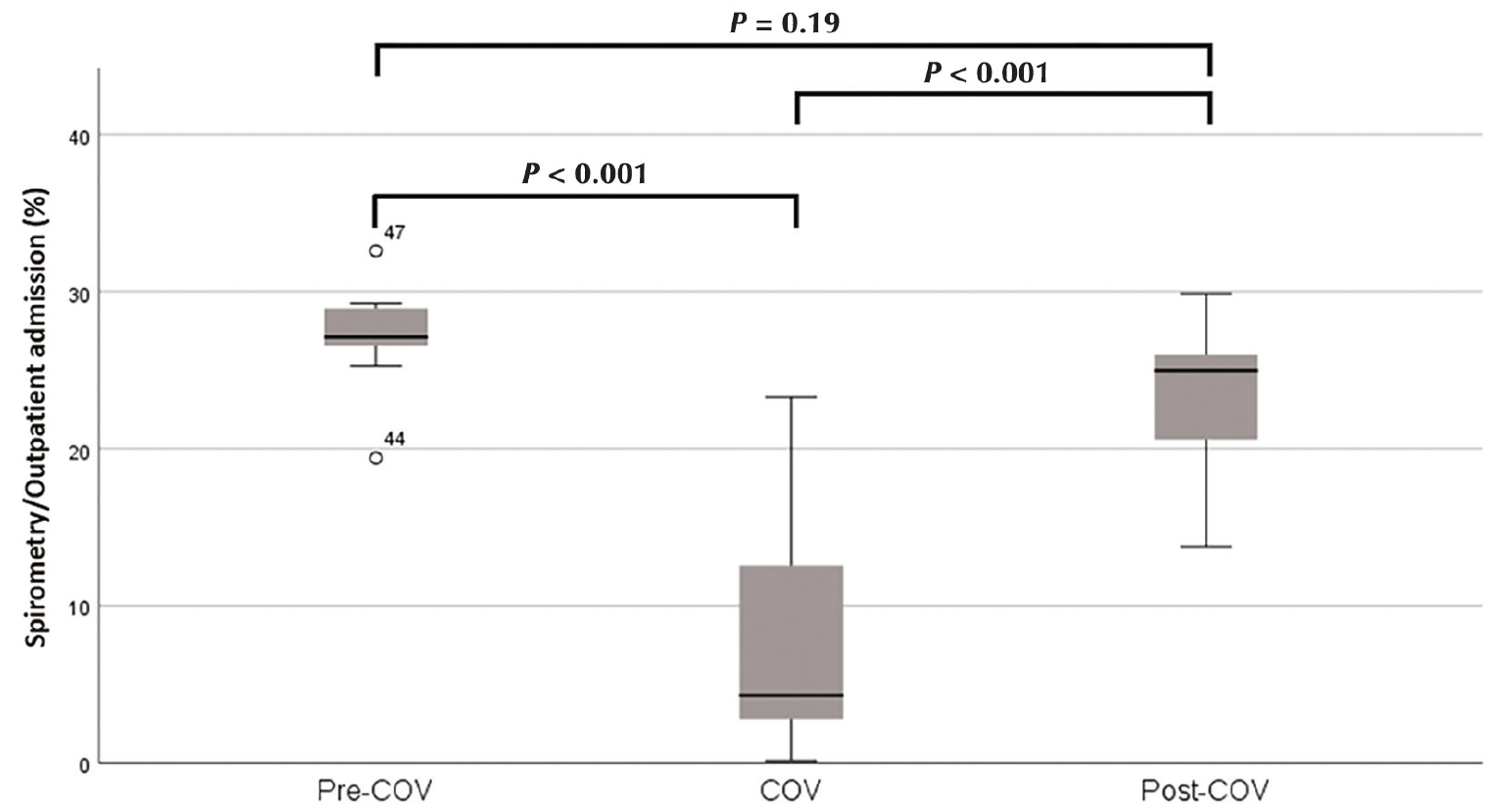
Pre-COV: pre-pandemic period, COV: pandemic period, Post-COV: post-pandemic period
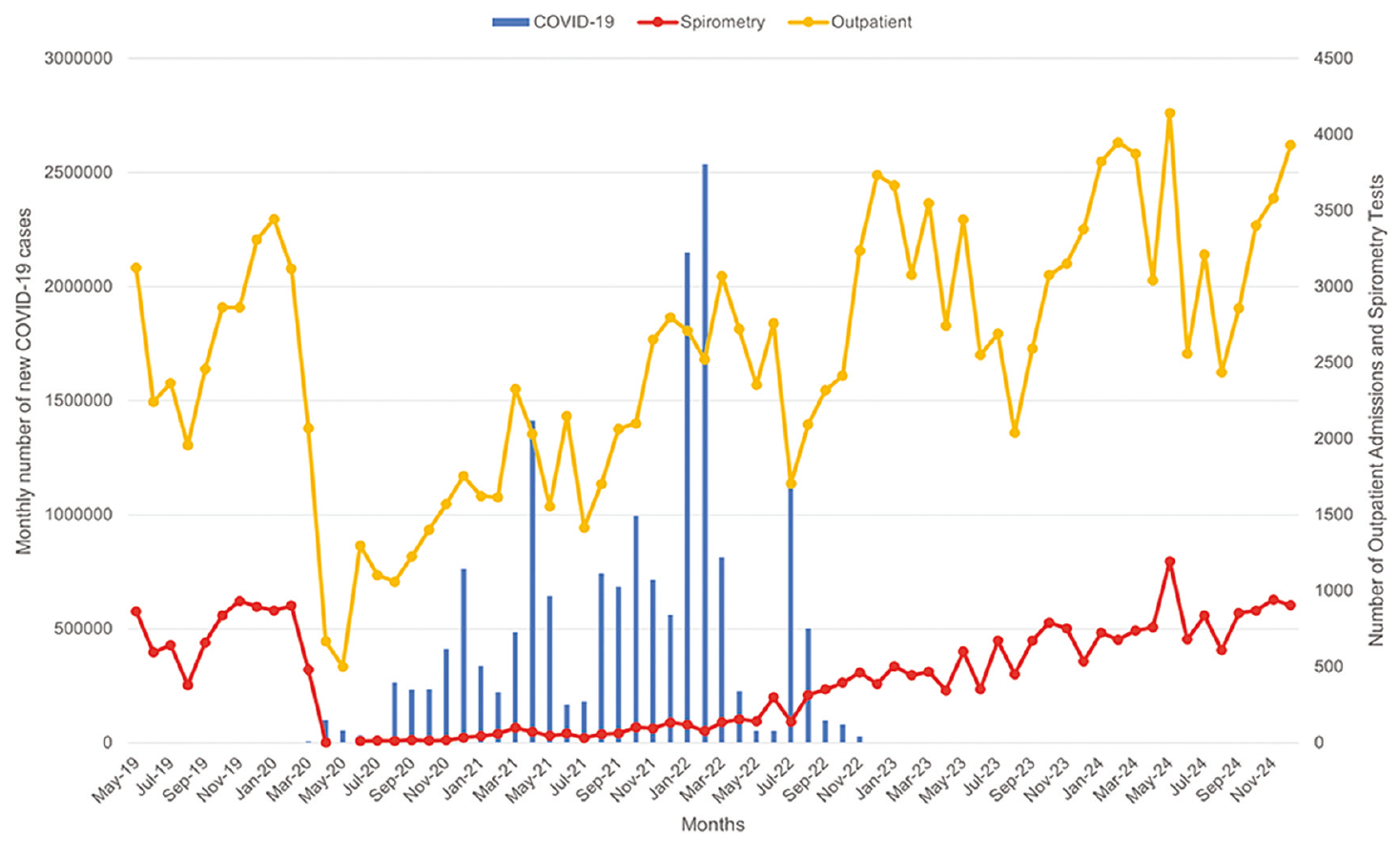
COVID-19: coronavirus disease-2019
Our findings demonstrated a reduction in the use of PFTs, consistent with previous studies. One study reported an 88% drop during the pandemic; another study from Türkiye noted fewer spirometry tests in 2021 than in 2019; and a recent study found that 73% of PFT laboratories suspended testing during the first pandemic peak, with some restricting procedures such as diffusing capacity tests., , As recommended in consensus reports, spirometry testing was restricted to reduce the risk of transmission, which likely contributed to this outcome.
Limitations include the single-center design, which limits generalizability, and potential confounders such as seasonal variation. The shorter pre-COV period results from missing data. The data lacked patient characteristics, such as new- or follow-up status, and did not indicate whether follow-ups were missed or diagnoses were delayed.
This study found a slight but comparable decline in PFTs during the post-pandemic period, consistent with previous reports. The relatively modest decline in lung diffusion capacity testing may be explained by its essential role in diagnosing certain diseases, such as interstitial lung disease, and by its link to insurance reimbursement.
In conclusion, spirometry use per outpatient admission declined significantly during the pandemic, while the spirometry-to-visit ratio showed a slight reduction from pre-COV to post-COV. This trend reflects the pandemic’s broader impact on healthcare utilization and highlights a potential unmet need. Future efforts should focus on developing safe, resilient testing strategies to ensure continuity of care during public health crises.
Footnotes
Ethics
Ethics Committee Approval: This study was approved by the ethics review boards at Ankara University Faculty of Medicine (decision no: 2025/500, 2025000500-1, approval date: 25.06.2025). The study was conducted in accordance with the Declaration of Helsinki.
Informed Consent: The requirement for informed consent was waived due to the retrospective design and use of anonymized, aggregated data.
Acknowledgment
Our sincere thanks to the devoted staff of the Pulmonary Function Test Laboratory for their steadfast service and courage throughout the challenges of the COVID-19 period.
Authorship Contributions
Concept: M.E., D.D.M., M.Ö.K., Ö.Y., Ö.Ö.K., Design: M.E., D.D.M., Ö.Ö.K., Data Collection or Processing: M.E., D.D.M., Analysis or Interpretation: M.E., D.D.M., M.Ö.K., Literature Search: M.E., D.D.M., Writing: M.E., D.D.M., M.Ö.K., Ö.Y., Ö.Ö.K.
Conflict of Interest: No conflict of interest was declared by the authors.
Financial Disclosure: The authors declared that this study received no financial support.
References
Bonacossa de Almeida CE, Harbron RW, Valle Bahia PR, Murta Dovales AC. The impact of the COVID-19 pandemic on the use of diagnostic imaging examinations in the Brazilian unified healthcare system (SUS). Health Policy Technol. 2023;12(1):100725.
Hale T, Angrist N, Goldszmidt R, et al. A global panel database of pandemic policies (Oxford COVID-19 Government Response Tracker). Nat Hum Behav. 2021;5(4):529-538.
Call JT, Lee AS, Haendel MA, Chute CG, Helgeson SA. The effect of the COVID-19 pandemic on pulmonary diagnostic procedures. Ann Am Thorac Soc. 2022;19(4):695-697.
Görek Dilektaşlı A, Börekçi Ş, Akkoca Yıldız Ö, et al. Nationwide assessment of pulmonary function testing practices and safety compliance during the COVID-19 pandemic. Thorac Res Pract. 2025;26(3):137-144.
Statista. Total number of confirmed coronavirus (COVID-19) cases and deaths in Turkey from March 11, 2020 to May 1, 2022. Accessed January 31, 2025.
Esendağlı D, Gül E, Özsancak A, Akçay Ş, Ulubay G. Has the pandemic changed the test quality of the pulmonary function test laboratory? Tuberk Toraks. 2022;70(4):358-364.